Malbork Castle: Routes, Tickets and the Train
Choose the right Malbork Castle route, understand Monday access and seasonal tickets, and plan an independent visit from Gdańsk.
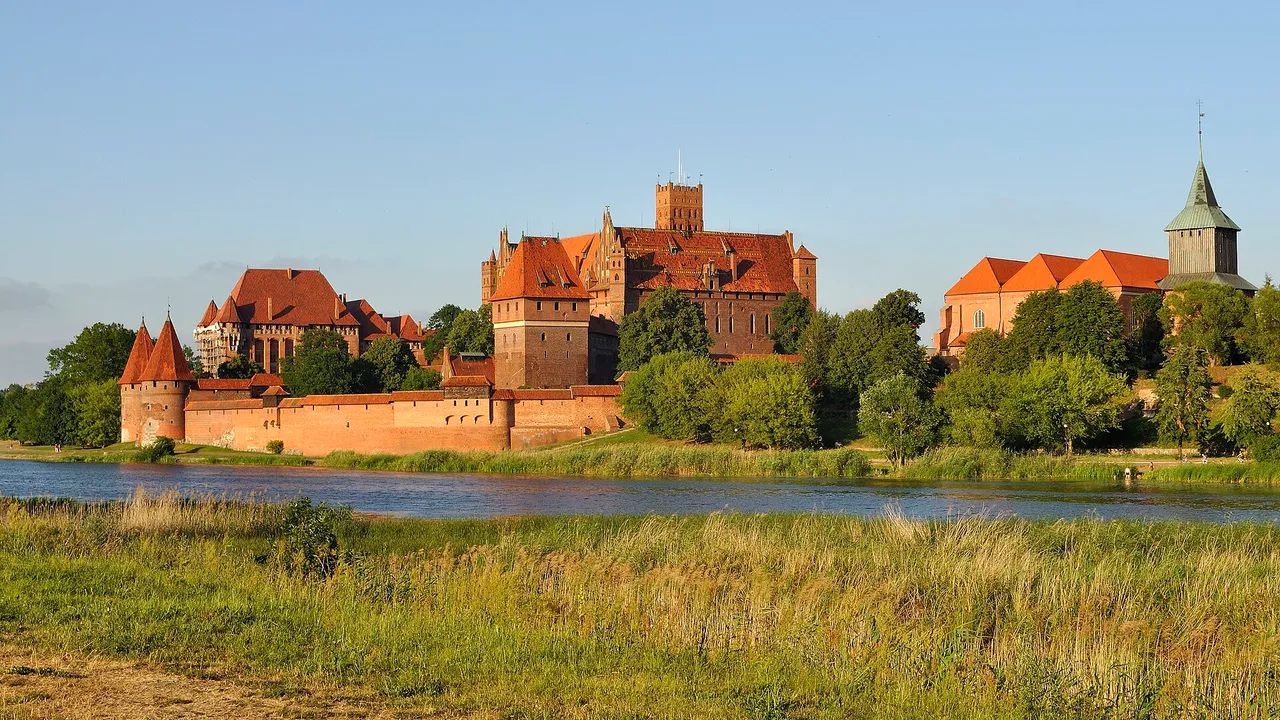
Malbork Castle is worth the trip for its interiors; the view across the river is only the start. Choose the Historical Castle Route if you want the chambers and exhibitions; the shorter Castle Grounds Route is a different outing. That distinction matters more than a small saving on a ticket, because the wrong route can leave out the part you’ve travelled to see.
The approach is dramatic, but the interiors explain the place. This was a fortified monastery of the Teutonic Order, and the complex combines religious life, government, defence and daily work. You’ll get more from it by watching how the spaces connect, from the monastic High Castle to the Grand Masters’ Palace.
High Castle, Middle Castle and Outer Bailey
The High Castle, Middle Castle and Outer Bailey form distinct parts of the site. UNESCO describes that connected layout as a key feature of Malbork. As you move between courtyards, gates and rooms, keep that wider plan in mind. The castle isn’t a single great hall with a few side rooms attached.
Look for the contrast between enclosed courtyards and the more expansive spaces used for authority and hospitality. The Great Refectory and the Grand Masters’ Palace belong to the Middle Castle, while the High Castle has the more concentrated monastic character. You don’t need to memorise a chronology to notice the difference in how these places feel and function.
Restoration is also part of what you’re looking at. UNESCO records major conservation work and the rebuilding that followed damage in the Second World War. The visible castle is a historic monument and a record of decisions about repairing one. Pay attention when the guide explains a reconstructed section; that helps you see the building with more interest than a simple division into “old” and “new” allows.
Historical Castle Route or Castle Grounds Route
The Historical Castle Route includes the castle complex and exhibitions. The Castle Grounds Route takes in outdoor areas, courtyards, terraces and defensive spaces, without the chambers and exhibitions. Read the route description in full before selecting a date: a lower price attached to “castle” doesn’t necessarily buy the same experience.
On the museum’s autumn-winter 2026/27 price list, valid from 1 October 2026 to 25 April 2027 and checked on 16 November 2026, a normal Historical Castle Route ticket costs 80 zł. The museum says a guide or audio guide is compulsory for sightseeing. The ticket includes either a Polish-speaking guide or an audio guide, with English among the audio languages. An exclusive guide, English included, is a separate option booked in advance by e-mail, and it switches you to group pricing: a 350 zł guide fee plus group admission at 65 zł a person (normal, same season), so don’t buy individual tickets online for it. A visit after 25 April 2027 falls outside this price list, so check the booking page again for the tariff and inclusions on your travel date.
In the same autumn-winter season the Monday free-admission arrangement gives access to the Castle Grounds Route, with a free ticket collected on site. It doesn’t turn Monday into a free version of the full Historical Castle Route. If the interiors are your reason for coming, plan around a day on which your chosen product is available, not around the word “free”.
Opening time and last admission are different pieces of information. In the autumn-winter 2026/27 season the museum lists the Historical Castle Route from 9:00 to 16:00 with last entry at 12:45, and says interiors and exhibitions close at 15:00. It also caps entry at 500 people an hour, so buy in advance. Compare the departure you can realistically reach with the last entry for your actual route, including time to walk from the station and collect the equipment.
From the train to the correct entrance
Malbork has its own railway station, and the museum lists direct rail access from cities including Gdańsk and Warsaw. The fastest EIP trains from Gdańsk Główny take 24 minutes in the 2026/27 timetable, as in our Poland train itinerary; check the date-specific timetable before you buy. By road the museum gives about 50 minutes and 72 km from Gdańsk.
The tour begins at Plac 60-lecia MZM, near the ticket counters, and the museum’s address is ul. Starościńska 1. Save both the castle location and that meeting point before travelling, so the riverside wall you see first isn’t mistaken for the start.
Malbork works best as a day out from a northern base, without luggage and without an ambitious evening plan.
If you’re continuing into the countryside by car, the Poland car-hire guide covers collection and road practicalities; on a castle day, compare the parking and the walk to visitor services with the train.
Refectories, a heated bedroom and amber
In the Palace of the Grand Masters, the Summer Refectory’s radial vault draws the eye towards its central pillar. The Winter Refectory connects with it through a neo-Gothic portal. Ask the guide or listen to the audio interpretation for how the rooms were used; their different forms are more revealing than treating each vaulted interior as another version of the same hall.
The room interpreted as the Grand Master’s bedroom introduces a domestic scale. The museum describes warm-air heating there. That detail makes comfort part of the castle story alongside defence and government. The audio guide is useful when it connects a small room with the institution that occupied the larger complex.
Amber Contexts adds a collection visit to the architecture. A reconstructed amber maker’s workshop explains production, while caskets, reliquaries and jewellery show what the material became. Look for Christoph Maucher’s Baroque casket and compare its worked surfaces with amber shaped by nature in the geological display. It’s a reason to choose the Historical Route’s exhibitions, not just a way into more chambers.
For children, the museum’s family audio version uses castle inhabitants, dialogue, sounds and music to tell a story set during the siege following Grunwald. It also gives navigation instructions. Check the family product’s language options for your travel date before choosing it, then ask for the family version when collecting the device. A human guide is another arrangement, with its own language and booking requirements; the shared pace differs from following the castle with an audio device.
Cobbles and stairs change the practical plan
The museum’s accessibility information is unusually clear about the historic surfaces. It describes uneven cobbles on the approach and difficulties moving from the ticket building into the castle, with narrow corridors and stairs in the medieval buildings. Contact the museum about the route you want to visit if mobility, balance or a wheelchair affects the plan.
Ask about specific areas and assistance, not for a single yes-or-no on the whole castle. The museum identifies adaptations in parts of the complex, so a precise enquiry can help you decide which visit is realistic and enjoyable.
Wear shoes with a grip and take a layer for time outdoors between interiors. It’s sensible to keep your day bag light: you’ll be looking up, listening and moving through a building designed for purposes far removed from modern visitor convenience. If the weather is poor, protect your belongings before you start.
Last entry, then the river
The Historical Castle Route’s last entry in the autumn-winter 2026/27 season is 12:45, so plan the morning around it. After the interior route, step back and look at the castle as a whole: the Nogat setting makes the relationship between walls, towers and landscape easier to read, and an exterior walk is a pleasant way to finish if you have the energy.
Photos
Read also

What to see · 7 min read
Visiting Auschwitz-Birkenau: Passes, Hours, Getting There
Updated · 17 November 2026How to visit the Auschwitz-Birkenau Memorial: the free online entry pass, guided or alone, hours by month, the Kraków train and bus, and the rules.

What to see · 6 min read
Wawel Royal Castle: Choose Exhibitions and Tickets
Updated · 17 November 2026Choose Wawel exhibitions in Kraków, distinguish castle and cathedral tickets, and plan booking, access and a manageable visit to the hill.

What to see · 6 min read
Wieliczka Salt Mine: Tickets, Stairs and the Train
Updated · 17 November 2026Plan Wieliczka Salt Mine from Kraków: Tourist Route tickets, stairs, underground conditions, the train and arrangements for visitors with mobility needs.

Car hire · 7 min read
Car Hire in Poland: Airport Desks, Tolls and e-TOLL Rules
Updated · 17 November 2026Hiring a car in Poland: airport pick-up in Warsaw and Kraków, why a normal car needs no e-TOLL, which motorways charge, and the rules to know.