Visiting Auschwitz-Birkenau: Passes, Hours, Getting There
How to visit the Auschwitz-Birkenau Memorial: the free online entry pass, guided or alone, hours by month, the Kraków train and bus, and the rules.
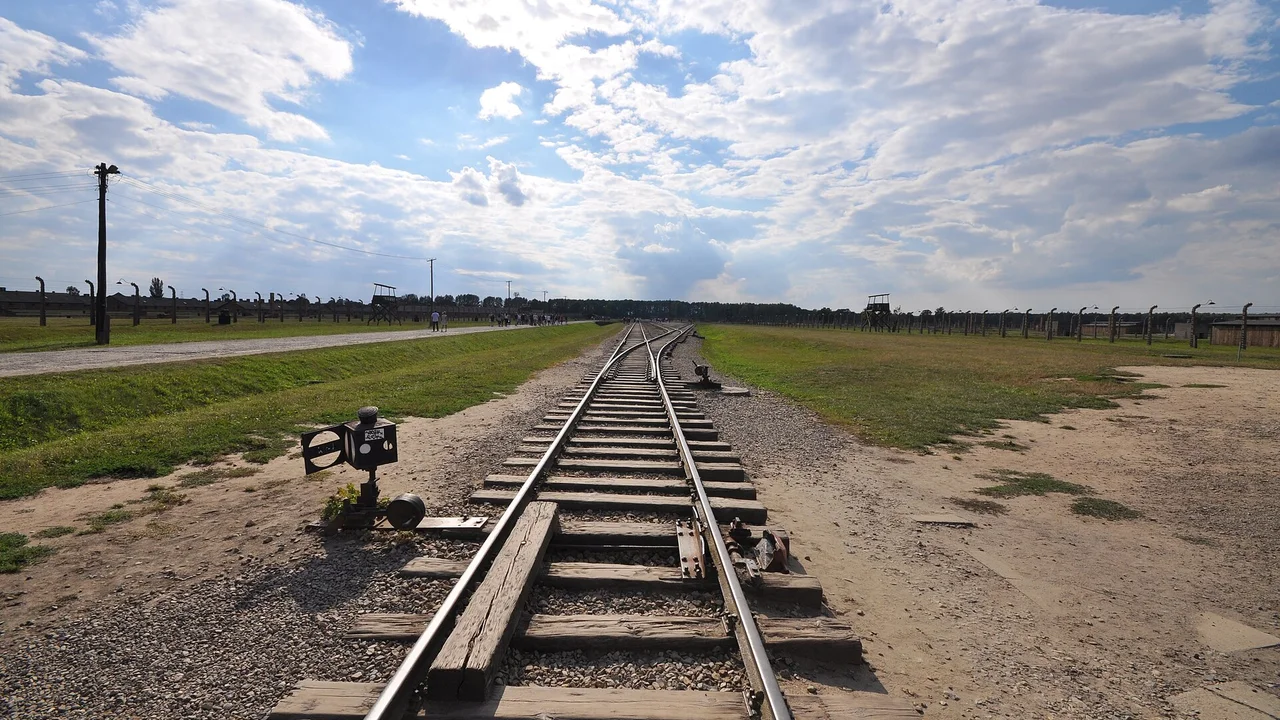
Entry to the grounds of the Auschwitz-Birkenau Memorial is free, but you can’t simply turn up: every visitor needs a personal entry pass issued in their name, to be shown with an ID document, and the museum says passes are reserved online at visit.auschwitz.org and not sold at the entrance. The second thing to know is the clock: for most of the day the grounds are open only to visitors with a museum educator, and going on your own isn’t possible until the afternoon. Hours and prices below are as the museum published them on 16 November 2026; check again before you travel, because the museum notes that its prices can change without notice.
Reserving the entry pass
The booking system releases dates every day from 12:00 noon, up to 90 days ahead for individual visitors. The museum suggests booking in advance and arriving at least 30 minutes before your time. There are two ways to visit.
You can go on your own, without a guide, but only at certain hours, with a free pass downloaded from the booking system. In January and November that means from 14:00; in February from 15:00; in March and October from 16:00; from April to September from 17:00; and in December from 13:00. Before those times, entry is only with a guide-educator. Set that against the hours below and the window is narrow: in most months you can start a self-guided visit only within one hour (in November between 14:00 and 15:00), and within two hours in June, July and August. In winter that leaves little daylight, so in the colder months the morning belongs to the guided tours.
Or you can join a tour with a museum educator, which is where a fee applies. Tours for individual visitors last about three and a half hours, start at Auschwitz I and include Birkenau and a headset. The museum provides a shuttle between the two sites for these tours. English tours start every hour, on the half hour: in November from 8:30 to 12:30, in December from 8:30 to 11:30, and in July and August every 15 minutes through the day. The museum’s entry-pass price list, valid from 2 January 2026, puts the regular pass for this guided tour at 150 zł in a language other than Polish (140 zł in Polish) and the reduced pass at 140 zł (130 zł in Polish); the six-hour study visit costs 190 zł regular and 170 zł reduced in a language other than Polish. Reduced prices apply to students under 26, visitors over 75, holders of a disabled person’s ID and some other groups, shown with documents. Individual reservations can’t be changed, so book once you’re sure of the date. The museum recommends the visit for people aged 14 and over.
Hours by month
The museum is open every day of the year except 1 January, 25 December and Easter Sunday. These are the entrance hours, meaning the time you can start the visit; you may stay on the grounds for 90 minutes after the last entrance.
| Month | Visit can start between |
|---|---|
| December | 7:30 and 14:00 |
| January, November | 7:30 and 15:00 |
| February | 7:30 and 16:00 |
| March, October | 7:30 and 17:00 |
| April, May, September | 7:30 and 18:00 |
| June, July, August | 7:30 and 19:00 |
The 90-minute rule matters for planning. The museum’s own examples are 17:30 in February and 20:30 in July, and by the same sum a December visit that starts at the last entrance ends at 15:30. You wouldn’t want to run the visit to the minute, though. The grounds are large, so choose a start time that leaves you room to stop and not hurry between the camps.
How long it takes
The museum advises setting aside a minimum of about an hour for the Auschwitz site and the same for Birkenau, and it says both parts are essential to understand the place. The two camps are 3.5 km apart. Leave the rest of the day free: a guided tour of 3.5 hours plus the journey fills most of a day, and you won’t want another sightseeing stop afterwards.
Auschwitz I is where the tour begins, with the permanent exhibitions and the main camp buildings. Birkenau, which covers nearly 200 hectares, has the ruins of the gas chambers and crematoria and the surviving barracks. The museum describes Birkenau as the place where the Nazis built most of the machinery of mass extermination, in which they murdered approximately one million European Jews.
Getting there from Kraków
By train, Koleje Małopolskie runs from Kraków Główny to Oświęcim. The single fare is 18 zł, and the journey is about 60 minutes by the route through Trzebinia or about 95 minutes by the route through Skawina and Zator, according to the operator’s timetable pages, valid from 25 October to 12 December 2026. From Oświęcim station it’s about 1,500 metres to the museum, so allow time for the walk or take a taxi. The centre and a car park are at Więźniów Oświęcimia 55, and there are luggage lockers in the car park.
By bus, the museum says Lajkonik buses run from Kraków directly to the museum car park, and that other buses and minibuses stop near the museum, from Kraków and Katowice. Fares and times change, so look at the operator’s current timetable. By car, the museum is on provincial road 933; you can use the museum car park, and the paid municipal car park at Birkenau.
Between the two camps, individual visitors on a guided tour ride the museum shuttle. If you’re touring alone, the museum describes a walking route of about three kilometres between the sites, a bit under the 3.5 km distance between the camps, or a taxi from the rank in front of the entrance.
If you’re staying in Kraków, the Kraków guide covers the airport train and where to sleep, and on the seven-day route by train the memorial gets a day to itself. If you’re driving, the car-hire guide explains which motorway sections charge a hire car. For Jewish life and culture beyond the memorial, the guide to Jewish heritage in Poland covers museums in Kraków, Warsaw and Lublin.
What to bring, and what to leave
The maximum size of a bag or other item you can bring in is 35 x 25 x 15 cm, so a small backpack or handbag is all you’ll take in. Larger luggage goes in the lockers or the car. Bags can be searched, including with X-ray scanners. Eating and bringing alcohol are not allowed, and neither is smoking, bringing in prams or pushchairs to the blocks and other buildings on the tour, or entering with animals other than assistance dogs. Candles may be lit only at two places: the Execution Wall at Auschwitz I and the International Monument at Birkenau.
Inside buildings, filming and photography are not allowed with flash or a tripod, and they’re forbidden altogether in Block 4 Room 5 and in the basement of Block 11. Photographing the security checkpoints is also forbidden, and so are drones without permission. Mobile calls aren’t allowed inside buildings, or in the silence zone of the courtyard of Block 11. Recording the educator’s commentary isn’t permitted either, since it counts as a copyrighted work.
The visitor regulations valid from 1 July 2026 also ask visitors to behave with due solemnity and respect and to dress in a manner befitting a place of this nature.
If you can’t go in person
The museum offers online guided tours of about two hours, led live by an educator with archival photographs and survivors’ testimonies, in seven languages including English. The museum’s online-tour page says they are designed for groups and that it doesn’t run separate tours for individuals, but anyone can book one as a private tour for 690 zł through visit.auschwitz.org.
Photos
Read also

What to see · 6 min read
Malbork Castle: Routes, Tickets and the Train
Updated · 17 November 2026Choose the right Malbork Castle route, understand Monday access and seasonal tickets, and plan an independent visit from Gdańsk.

What to see · 6 min read
Wawel Royal Castle: Choose Exhibitions and Tickets
Updated · 17 November 2026Choose Wawel exhibitions in Kraków, distinguish castle and cathedral tickets, and plan booking, access and a manageable visit to the hill.

What to see · 6 min read
Wieliczka Salt Mine: Tickets, Stairs and the Train
Updated · 17 November 2026Plan Wieliczka Salt Mine from Kraków: Tourist Route tickets, stairs, underground conditions, the train and arrangements for visitors with mobility needs.

Car hire · 7 min read
Car Hire in Poland: Airport Desks, Tolls and e-TOLL Rules
Updated · 17 November 2026Hiring a car in Poland: airport pick-up in Warsaw and Kraków, why a normal car needs no e-TOLL, which motorways charge, and the rules to know.