Jewish Heritage in Poland: Kraków, Warsaw and Lublin
Plan Jewish heritage visits in Kazimierz, Warsaw and Lublin, balancing museums, surviving places, memorials and contemporary Jewish life.
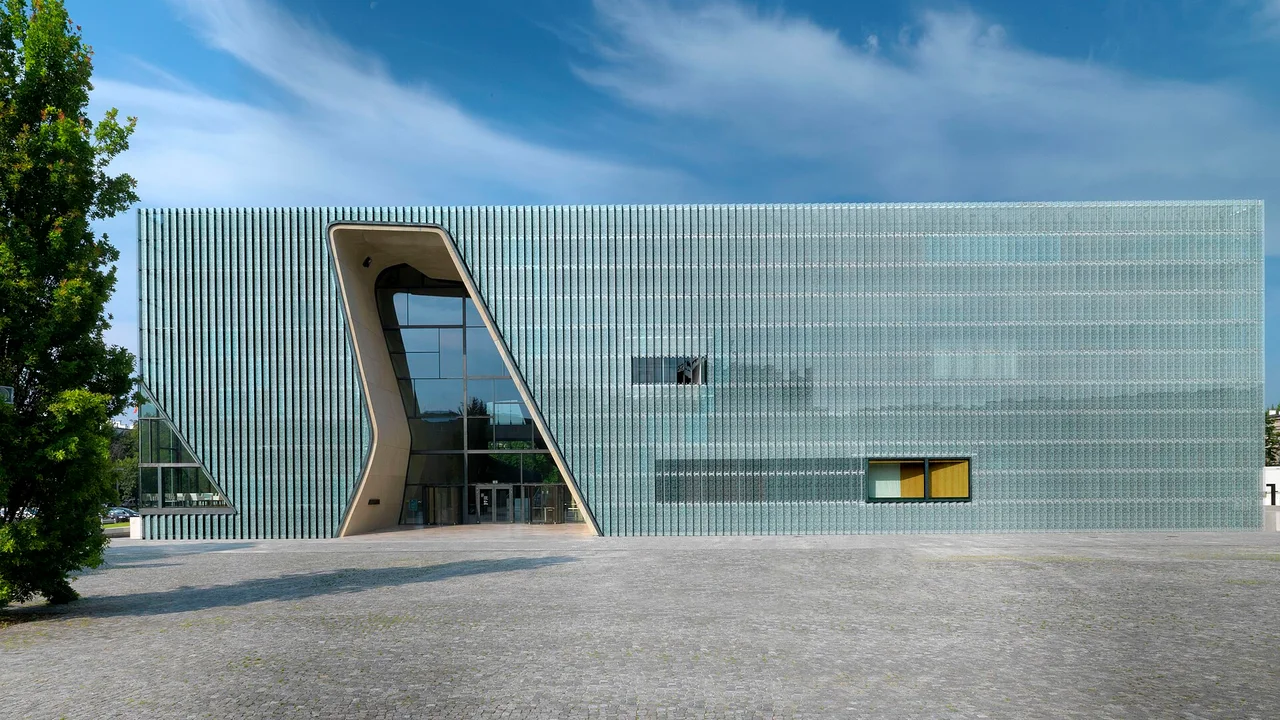
For many visitors, Auschwitz is where they first meet Jewish Poland. Start somewhere else as well: Kazimierz in Kraków, POLIN in Warsaw and the Grodzka Gate in Lublin tell the story of the people who lived here for centuries, not only of how their world was destroyed. Each city gives you a different way in: a historic district with two museums, one long exhibition that covers a thousand years, and a small centre devoted to memory.
The practical question is what you want a visit to do. Are you trying to understand religious life, follow family history, learn about the Holocaust or see how Jewish culture continues? Those interests overlap, but they don’t all lead to the same museum, guide or afternoon walk.
| Place | Hours | Entry |
|---|---|---|
| POLIN Museum, Warsaw (6 Mordechaja Anielewicza St) | Mon, Wed-Fri, Sun 10:00-18:00; Sat 10:00-20:00; closed Tue | 45 zł; reduced 35 zł for EU, EEA and Swiss nationals only (students, over-60s); free Thu |
| Galicia Jewish Museum, Kraków (ul. Dajwór 18) | Daily 10:00-18:00 | 35 zł, senior or student 25 zł |
| Old Synagogue, Museum of Kraków (ul. Szeroka 24) | Mon 10:00-15:00; Tue-Sun 9:00-17:00 | 22 zł; students and over-65s 16 zł; free Mon |
| State Museum at Majdanek, Lublin (Droga Męczenników Majdanka 67) | Apr-Oct 9:00-18:00, Nov-Mar 9:00-16:00; closed Mon | Free |
Hours and prices come from each museum’s own pages, read on 17 November 2026. Last entry is 2 hours before closing for POLIN’s core exhibition and an hour before closing at Majdanek. The Old Synagogue also lists closures on 10, 24, 25 and 31 December, and Majdanek closes on public holidays such as 1 January, Easter and 11 November, and from 24 to 31 December. Check the page for your date.
Give the subject room in the itinerary
For a first encounter, begin with an institution that provides context, then walk the surrounding streets. An exhibition can explain what a building meant before it became a landmark on a tourist map, and the walk afterwards gives that information a location.
Avoid placing every demanding visit on the same day. A historical exhibition, a working synagogue and a memorial ask a lot of a visitor in one afternoon, so leave room to pause between them. Travelling companions may also have their own reasons for coming, particularly if the trip connects with family history, so talk about that before choosing the pace.
When booking a guide, ask about the focus of the walk. A tour of architecture, an introduction to religious history and a visit centred on wartime events can follow overlapping streets while telling quite different stories. Operators and museums publish what each walk covers, so pick the subject before the time slot.
Keep your first base practical. The Kraków guide covers the wider city visit, while the rail route through Poland gives a framework for moving between bases. If you’re following that route, POLIN fits the Warsaw day and the Kazimierz museums the Kraków day: one gives you the long history, the other the streets where part of it happened.
Kazimierz: start with culture
Kraków’s Kazimierz district is the setting for the Galicia Jewish Museum and the Old Synagogue branch of the Museum of Kraków. You can choose by what draws you first: objects and religious culture, or photographs and the traces of Jewish life across a wider landscape.
The Old Synagogue’s museum collection concerns Jewish history and culture, especially the Jewish community of Kraków, which makes it a useful stop for understanding the cultural world behind the building.
The Galicia Jewish Museum describes a mission combining commemoration of Holocaust victims with celebration of the Jewish culture of Polish Galicia. Its photographic exhibition, Traces of Memory, moves attention beyond the best-known Kraków streets, so the district becomes a starting point for a wider history.
If you’re interested in religious practice, begin with the Old Synagogue’s cultural collection. If you’re interested in how Jewish history remains visible in places, the photographic approach at Galicia offers another lens. Visiting both is worthwhile, and they’re a short walk apart.
Warsaw: POLIN supplies the longer perspective
POLIN Museum’s core exhibition follows Jewish life in the Polish lands across a thousand years. It includes culture, religion, work and family life alongside the Holocaust and the postwar story. That breadth is especially useful if your previous knowledge comes mainly from accounts of persecution and destruction.
The museum uses objects, reconstructions and multimedia to build that account. The reconstructed painted ceiling of the wooden synagogue from Gwoździec offers a point at which to stop and look: you’re seeing a reconstruction, and the interpretation beside it explains how it was made and which historical world it helps describe.
The museum stands in the former Jewish district that was turned into a ghetto under Nazi occupation. Walking outside after the exhibition changes the setting again. Use a reliable historical map or a specialist guide when you want to connect present-day streets with places that no longer look as they did.
Lublin: the Grodzka Gate and Majdanek
In Lublin, the Grodzka Gate stands at the historic meeting point of the Christian and Jewish parts of the city. POLIN’s heritage documentation identifies it as the home of the Grodzka Gate - NN Theatre Centre, whose projects commemorate Lublin’s Jews and the city’s multicultural history.
That makes the gate a good starting point for a visit interested in memory as well as monuments. Begin by finding out what the centre is offering for your travel date, and ask about the language and format of the visit before assuming that walking through the passage is the same as seeing an exhibition.
Take a map into the streets afterwards and pay attention to the way the past is explained. If you’re following a family connection, record the address and the source that identifies it instead of relying on an approximate point saved on a phone map.
On the south-eastern edge of the city is Majdanek, which the museum describes as a German Nazi concentration and extermination camp (1941-1944) and which is now the State Museum at Majdanek. It’s a memorial visit with its own weight. Admission is free and the museum advises about three hours for the visit. On 17 November 2026 its site said a section of the visitor route near the Monument-Gate was closed for renovation until further notice, so read the visitor page before you go and give it a separate half-day.
Jewish life today, and the places still in use
Some of the places on a heritage walk aren’t museums. In Kazimierz, the Remuh Synagogue on Szeroka Street became the main place of prayer for Kraków’s Jewish community, holds daily prayers, and has the Remuh Cemetery beside it. Kraków’s city tourism site lists it as closed on Saturdays and Jewish holidays and open from 10:00 to 16:00 Monday to Thursday and Sunday, and to 14:00 on Friday, from November to March; from April to October it’s open to 18:00, or 16:00 on Friday.
In Warsaw, the Jewish Community runs visits to the Nożyk Synagogue at ul. Twarda 6: Sunday to Thursday 10:00 to 17:00, Friday 10:00 to 16:00, with a break from 13:30 to 14:00, on the community’s page read on 17 November 2026. In Lublin, the former Chachmei Lublin yeshiva on Lubartowska Street, opened in 1930, houses a restored synagogue with regular prayer services and a mikveh, a hotel and a small museum of the yeshiva’s history, according to the Warsaw Jewish Community’s Lublin branch.
Working synagogues have their own rules, so check the community’s visiting page for your day before you go. Jewish culture as something lived, not displayed, comes into view during the Jewish Culture Festival in Kazimierz: its 35th edition ran from 1 to 5 July 2026. If your dates are flexible, early summer is when to come, and the organisers’ site announces each year’s programme.
Family research and remembrance
If your interest is genealogical, separate what you already know from what you hope to discover. Bring names with alternative spellings, the places attached to them and the documents behind each connection. Contact the relevant institution through its published research channels before travelling if you need access to particular material, because a museum visit isn’t a research appointment.
For an exhibition, use the museum’s own ticket and accessibility details, and raise needs such as step-free access or a particular language before the trip.
When the itinerary includes Auschwitz-Birkenau, prepare for that memorial visit separately. Read its visitor information and allow the experience its own space. It shouldn’t have to carry the entire explanation of Jewish life in Poland.
Leave the last hour of each heritage day unplanned. After POLIN, walk the streets of the former Jewish district outside with the museum’s account fresh; after the Kazimierz museums, spend a few quiet minutes in the Remuh Cemetery; in Lublin, walk back through the Grodzka Gate into the Old Town.
Photos
Read also

Things to do · 6 min read
Christmas Markets in Poland: Choose Your City
Updated · 17 November 2026Compare Christmas market breaks in Kraków, Wrocław, Gdańsk and Poznań: the 2026 dates and layout of each, plus hours where organisers publish them.

What to see · 7 min read
Visiting Auschwitz-Birkenau: Passes, Hours, Getting There
Updated · 17 November 2026How to visit the Auschwitz-Birkenau Memorial: the free online entry pass, guided or alone, hours by month, the Kraków train and bus, and the rules.

Car hire · 7 min read
Car Hire in Poland: Airport Desks, Tolls and e-TOLL Rules
Updated · 17 November 2026Hiring a car in Poland: airport pick-up in Warsaw and Kraków, why a normal car needs no e-TOLL, which motorways charge, and the rules to know.

Transport · 8 min read
Getting Around Poland: Trains, Coaches and Airports
Updated · 17 November 2026Choose trains, coaches or a car in Poland, check station names and airport transfers, and understand tickets and reservations before booking.