Poland Before You Go: Entry, Money and Seasons
Plan a first Poland trip with passport and EES checks, złoty and cards, seasonal choices and a workable arrival plan.
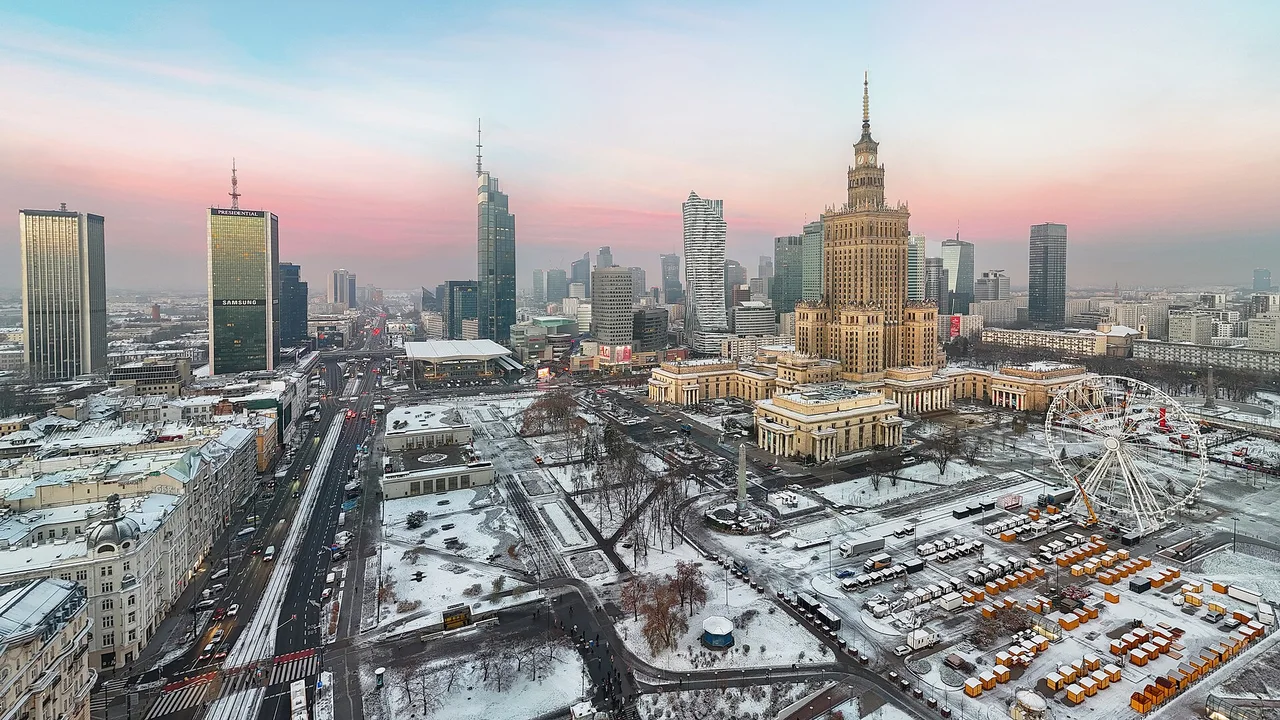
If you hold a US, UK, Canadian, Australian or New Zealand passport, a holiday in Poland needs no visa: you get up to 90 days in any 180-day period, counted across the whole Schengen area, not Poland alone (checked on 17 November 2026). A week in Prague or Berlin before Kraków therefore comes out of the same allowance. Poland is in the EU but not in the eurozone, so you’ll pay in złoty (zł on menus, PLN on bank statements). What’s left to plan is money, the season and a first night that doesn’t hang on a tight connection.
Your passport: two dates to check
The visa exemption comes from Annex II of the EU’s visa regulation, which names Australia, Canada, New Zealand and the United States and, through a later amendment, the United Kingdom. Holders of some British passports, such as overseas territories citizens, are treated separately, so check the type of passport you carry.
The EU’s Your Europe page, last reviewed on 19 August 2026, sets the entry conditions for non-EU visitors: the passport must be valid for at least 3 months after the date you intend to leave the EU and must have been issued within the last 10 years. Look at both dates. A passport with a year left before expiry can still fail the issue-date test.
General information, not legal advice. Entry rules depend on your nationality and residence status and can change. This section follows the EU’s Your Europe and European Commission pages and the text of Regulation (EU) 2018/1806 as read on 17 November 2026; check your own case with a Polish consulate or the official EU travel portal before you book.
A visa exemption covers a holiday, not work. If your plans stretch beyond a trip, settle the immigration position before paying for anything non-refundable.
EES and ETIAS: two systems, two checks
The EU Entry/Exit System, or EES, registers non-EU visitors on short stays each time they cross the Schengen area’s external borders, taking fingerprints and a facial image. The European Commission says it has been fully operational since 10 April 2026 (page read on 16 November 2026). If you fly into Schengen elsewhere and continue to Poland, your entry processing happens at that first external border, before you reach Poland. Travelling overland inside Schengen isn’t border-free in practice either: Your Europe notes that temporary checks at internal borders are possible, so carry your passport.
ETIAS, the online travel authorisation for visa-exempt visitors, is a separate system from EES. On 16 November 2026 the Commission’s Smart Borders page still said ETIAS was not in operation, and its visa-policy page describes ETIAS as a form plus a small fee that is not a visa. Check the EU’s official travel portal for your passport and travel date when you book, and again a week before you fly, because a trip in 2027 could fall on either side of the launch.
Money: złoty, cards and Sundays
Poland’s legal tender is the złoty. Cards are widely accepted, particularly in towns and tourist places, but carry a little cash for small purchases. When a card terminal or cash machine offers to bill you in your home currency, Visa says that option includes an exchange rate and additional fees; the choice is yours, and Visa advises declining if the rate and fees aren’t shown or you’re pressured to accept. Choose złoty and your own bank sets the rate. Ask your bank about overseas card and withdrawal charges before you leave.
Three numbers anchor a Poland budget, each from the operator and dated. An express (EIP) ticket from Warsaw to Kraków has a base fare of 169 zł in second class in PKP Intercity’s price list in force from 23 July 2026. Promo fares cost less but are limited: the operator advertised some from 29 zł in January 2026. The train from Kraków Airport to Kraków Główny costs 20 zł with luggage free, on the airport’s page read on 16 November 2026. And in Kraków the airport’s fare table lists 4 zł for a 15-minute ticket, 6 zł for 30 minutes and 20 zł for 24 hours in zone I. Hotels and meals depend on your dates, so price your own.
Plan your first Sunday. Trade in shops is banned on Sundays and public holidays, with eight trading Sundays a year; the 2026 list is 25 January, 29 March, 26 April, 28 June, 30 August and 6, 13 and 20 December. Petrol stations and pharmacies are among the exemptions. If you land on a Saturday evening, buy breakfast and water on the way to the hotel. The list is set year by year, so look up your dates.
Choose a cancellation policy deliberately. A flexible room is worth paying for while flights or a wider European route are unsettled. Once the route is firm, compare breakfast, luggage storage and late-arrival arrangements, which change the value of an apparently cheaper room.
Match the season to the plan
A city visit works around changeable weather by mixing walks with indoor stops. A trip built around beaches or mountain paths has less room to improvise, so choose the activity you’d be disappointed to miss and let it set the season.
The Polish Tourism Organisation describes changeable autumn weather and shorter winter days, and says waterproofing is necessary throughout the year. Pack a light waterproof layer even for a café-and-museum trip.
In the mountains, check the calendar before the forecast. In the Tatras, Jaskinia Mroźna is shut from 1 November to 25 April, the Slovak trails above the huts in TANAP are closed from 1 November to 31 May, and walking on park trails after dark is banned from 1 March to 30 November. The Tatra Mountains and Podhale guide has the detail; read it before choosing your accommodation and transport.
Book the route, then the cover
For a first visit, a clear line between a few bases is easier to manage than repeated journeys back to the same airport. The Poland route by train is a framework to adapt; check live trains for your own dates. A car might help with a rural stay while adding little to a visit centred on walkable historic districts, and the car-hire guide covers that decision and the road-charge questions.
Getting around Poland covers station names, airport transfers and which trains need a seat reservation. If you’re travelling with a buggy, mobility aid or substantial luggage, check the operator’s accessibility information instead of inferring it from a map symbol.
Leave an unbooked stretch somewhere in the trip. It gives you space to move a walk away from heavy rain or recover from a delayed journey.
Sort out health cover before the bookings get expensive. An EHIC or UK GHIC covers necessary state treatment only, not private care or medical repatriation, and visitors insured in the US, Canada or Australia can’t use these cards at all. The travel insurance guide for Poland explains what that means at a Polish hospital and what to compare.
Checklist by date
| When | What to settle |
|---|---|
| Before you book | Passport valid 3 months past your planned exit from the EU and issued within 10 years; count your Schengen days; check ETIAS on the EU travel portal; arrange insurance |
| A week before | Recheck ETIAS; match airport and station names to the booking; note which Sunday you land and where you’ll buy breakfast |
| Arrival day in Kraków | Airport train to Kraków Główny, 20 zł; a 15-minute city ticket is 4 zł |
| Arrival day in Warsaw | From Chopin airport, buy a ticket valid for at least 75 minutes to reach the CENTRUM stop in about 30 minutes (airport page, checked 16 November 2026) |
The emergency number anywhere in Poland is 112.
Photos
Read also

What to see · 7 min read
Visiting Auschwitz-Birkenau: Passes, Hours, Getting There
Updated · 17 November 2026How to visit the Auschwitz-Birkenau Memorial: the free online entry pass, guided or alone, hours by month, the Kraków train and bus, and the rules.

Car hire · 7 min read
Car Hire in Poland: Airport Desks, Tolls and e-TOLL Rules
Updated · 17 November 2026Hiring a car in Poland: airport pick-up in Warsaw and Kraków, why a normal car needs no e-TOLL, which motorways charge, and the rules to know.

Things to do · 6 min read
Christmas Markets in Poland: Choose Your City
Updated · 17 November 2026Compare Christmas market breaks in Kraków, Wrocław, Gdańsk and Poznań: the 2026 dates and layout of each, plus hours where organisers publish them.

Transport · 8 min read
Getting Around Poland: Trains, Coaches and Airports
Updated · 17 November 2026Choose trains, coaches or a car in Poland, check station names and airport transfers, and understand tickets and reservations before booking.